
Children's Water Education Council
c/o Waterloo Region Museum
10 Huron Rd.,
Kitchener, ON N2P 2R7
Phone: (519)748-1914
Fax: (519)748-0009
Email: [email protected]
|
Practical Water Conservation Activities for Kids
Water stewardship teaches concrete skills, improves public health, and reduces household
costs. Children who learn water saving habits early carry them into adulthood and influence
family behavior. Practical results are measurable: the U.S. Environmental Protection Agency
estimates typical U.S. households use about 300 gallons daily; household leaks can waste
nearly 10,000 gallons per year. Local programs that engage youth contribute to lower utility
bills, reduced treatment loads for municipal systems, and stronger neighborhood resilience
during droughts. Emphasize immediate wins for kids, such as shorter showers and
faucet-turning games, alongside community-scale outcomes like lower peak demand and reduced
stormwater runoff.
Learning through play and everyday flows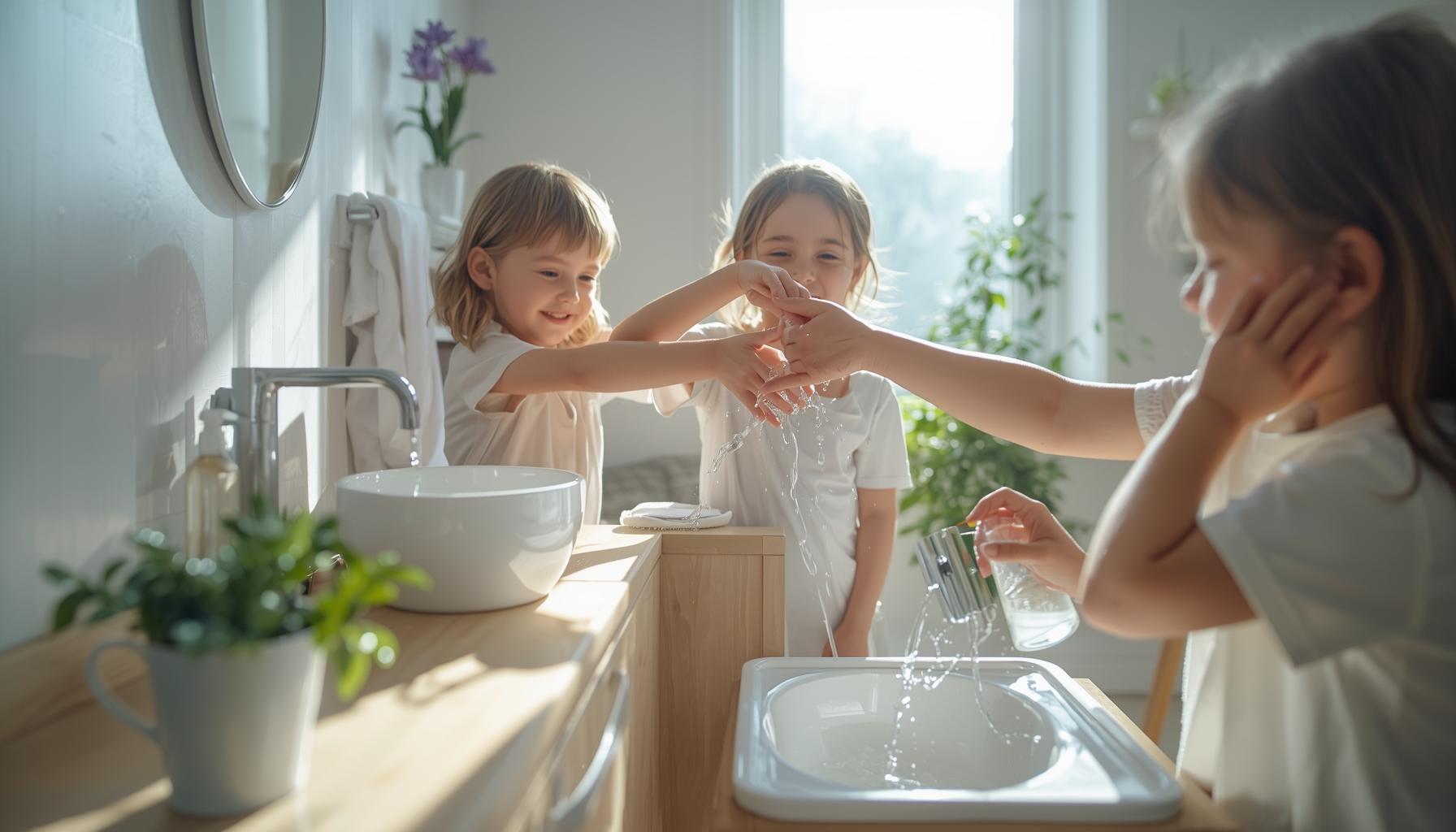
Hands-on play accelerates comprehension of the hydrologic cycle and daily water pathways
without dense explanations. Simple, supervised activities turn concepts into lived
experience: tracing a cup of tap water through home fixtures, charting where used water
goes, and staging role play with a mock watershed map. Use visual cues like colored cups or
stamped chore charts so children of all ages can follow cause and effect. Everyday routines
provide natural learning moments. Bath time demonstrates volume and flow. Plant watering
shows infiltration and evaporation. A basic household map that marks supply, use, and
drainage helps kids see how choices affect pipes, treatment plants, and streams.
Home and classroom hands-on projects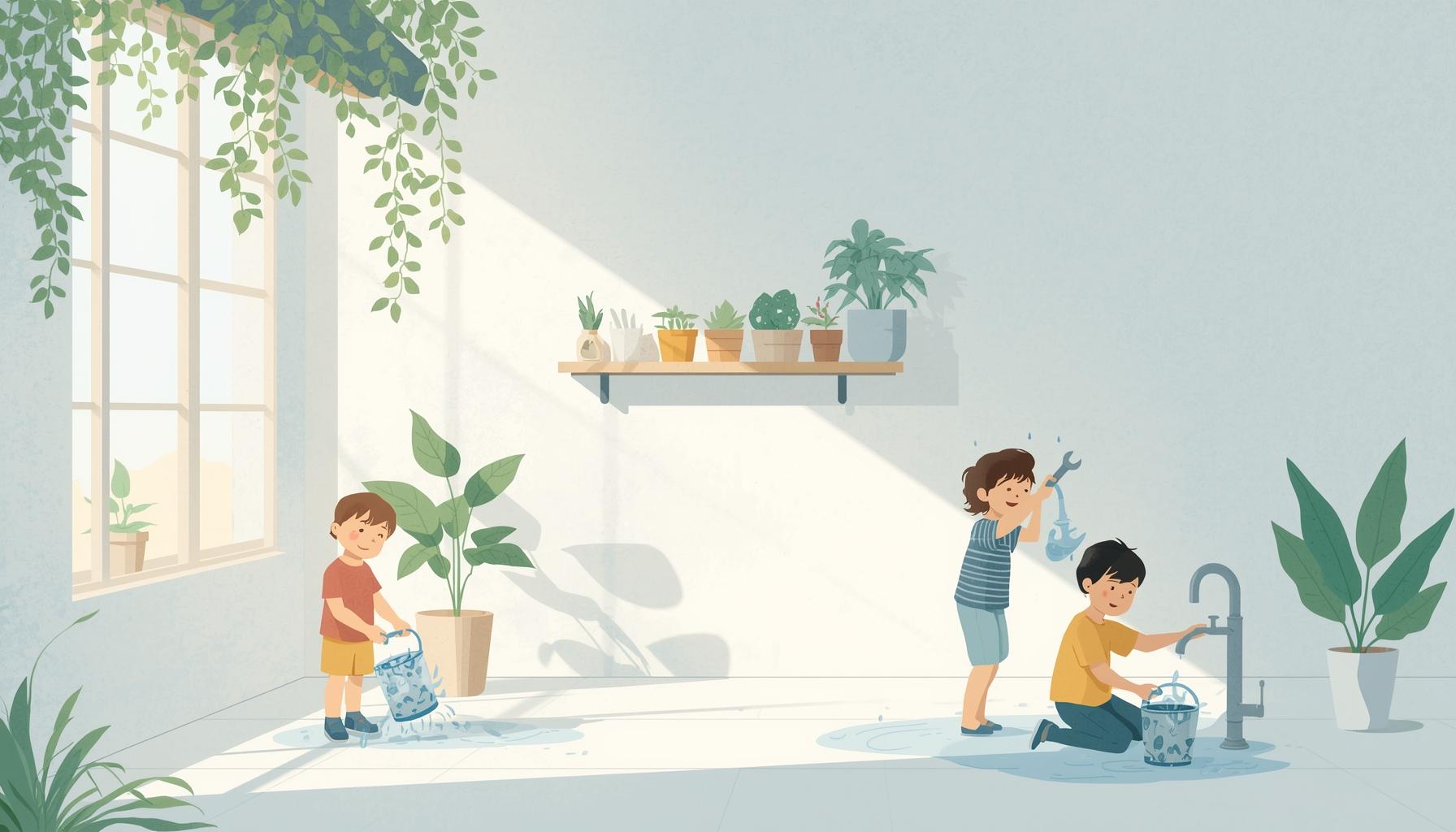
Combine crafts, experiments, and behavior tracking so learners connect actions to outcomes.
Practical projects make efficiency tangible and often inexpensive to run. The following
matrix pairs activity, target age, typical materials, time, and rough water savings for
families when the activity is scaled in a household of four. Numbers reference EPA and
WaterSense program summaries and municipal conservation reports.
| Activity name |
Best ages |
Materials required |
Typical session time |
Estimated annual water savings (family of four) |
| Fix a leaky faucet demo and checklist |
6–12 |
wrench, replacement washers, checklist |
45–90 minutes |
up to 10,000 gallons if leaks fixed promptly |
| Low-flow shower swap simulation and pledge |
8–16 |
old and low-flow showerheads, flow bucket, stopwatch |
30–60 minutes |
~2,900 gallons per person when upgraded |
| Toilet trial with dye and flow meter |
10–16 |
food coloring, simple flow meter, log sheet |
30–60 minutes |
up to 13,000 gallons annually replaced by modern toilet |
| Waterwise gardening seedbeds |
4–14 |
native seeds, mulch, watering can, soil |
60–120 minutes |
varies; smart irrigation can reduce outdoor use by 30–50% |
| Rain barrel build and harvest |
10–16 |
barrel, screen, spigot, basic tools |
90–180 minutes |
collects hundreds to thousands of gallons per season |
| Dishwashing and efficiency experiment |
5–15 |
dishpan, timer, measuring cup |
20–40 minutes |
running tap vs efficient methods saves hundreds to thousands of gallons |
Begin each session with short safety reminders and end with a reflection that ties the
activity to daily choices. For younger children, focus on visual demonstrations and short
hands-on steps. For teens, add data logging, simple calculations, and community outreach
components.
Measuring use, partnerships, technology, and inclusion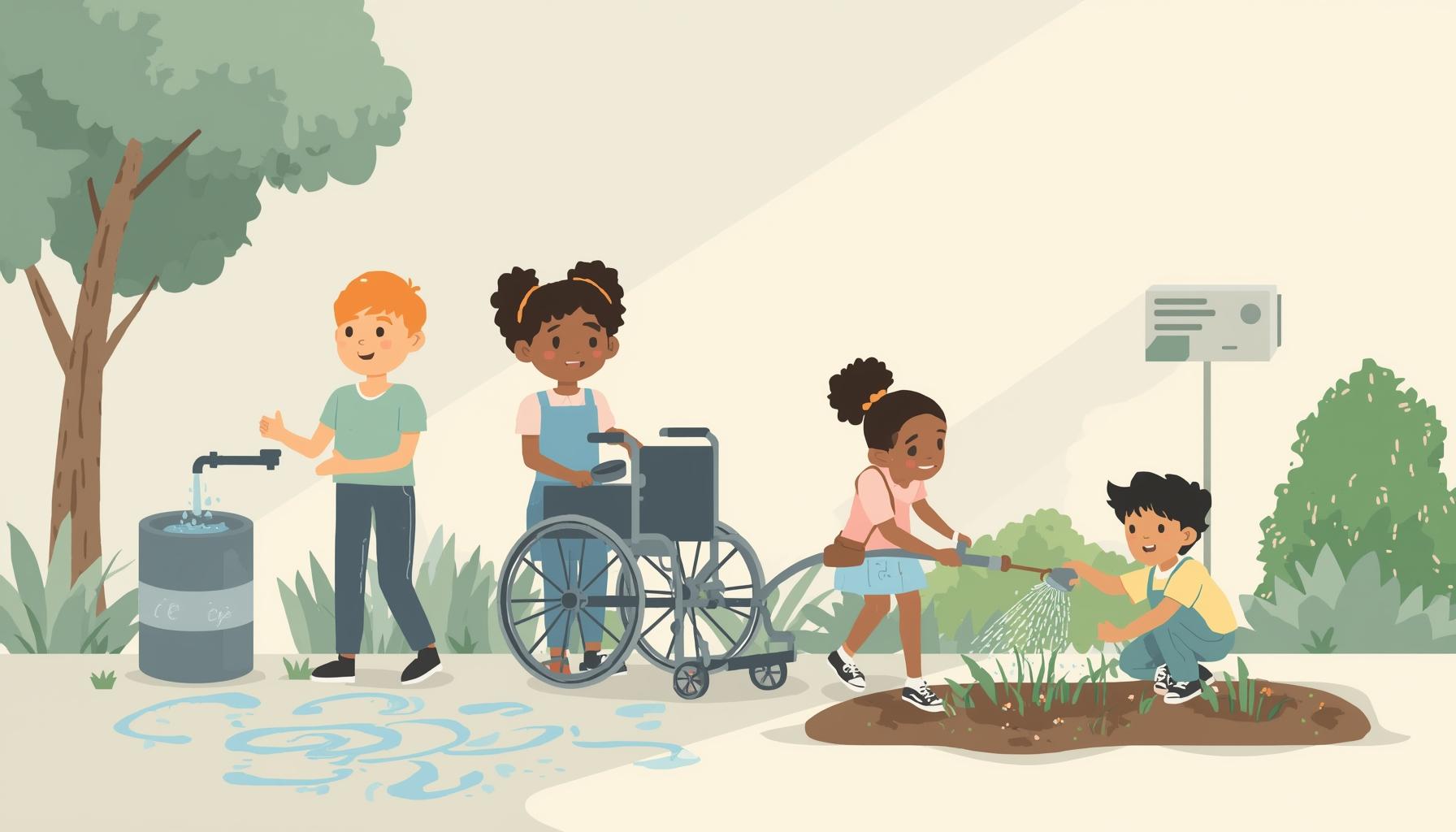
Tracking progress reinforces behavior change. Meter-reading exercises and simple spreadsheets
let students convert daily habits into gallons saved. Many utilities across the U.S. use
customer engagement platforms that can be leveraged for youth programs. Examples include
WaterSmart and Dropcountr, which provide household data and conservation challenges. Federal
and state resources that support programming include the EPA WaterSense campaign, Project
WET curriculum materials, and regional water boards such as the California State Water
Resources Control Board grant programs. Local utilities often offer classroom visits, free
kits, and leak repair rebates.
Accessible design and safety are essential. Adapt activities for mobility, sensory
differences, and language diversity. Use pictorial guides, translated materials, and tactile
components. Always supervise experiments with tools or heated water and follow local school
safety protocols.
Funding and low-cost supplies expand reach. Small grants from municipal utilities,
environmental education funds from state governments, and national EPA environmental
education grants can cover materials. Crafts that repurpose plastic bottles, cardboard, and
donated hardware keep costs low while modeling upcycling.
Sustaining behavior requires assessment and recognition. Encourage learners to maintain
simple portfolios that document projects, meter readings, and a personal pledge. Reward
systems tied to measurable outcomes, such as a school-wide meter reading challenge that
reduces consumption by a percentage, encourage long-term shifts. Events that tie youth
efforts to community goals, like neighborhood conservation challenges, amplify impact and
build civic engagement.
Program leaders should combine hands-on experiments with STEM learning by incorporating
measurement, data analysis, and design thinking. Real-world tech engagement motivates older
students through app-based tracking and API-enabled meter dashboards provided by some
utilities. For ongoing support, assemble a resource pack that includes curriculum guides,
local rebate information, and contact details for utility conservation staff so educators
and caregivers can continue activities beyond a single session.
End each activity with a clear next step families can take that week, such as checking for
leaks, installing a faucet aerator, or setting a 5-minute shower timer. This turns classroom
learning into measurable community action and builds a generation that values practical
water stewardship.
|